Anyone who has spent time implementing MDM knows how much work happens around the edges of the actual problem.
There is the data to connect, obviously. Then there is the mapping, the modelling, the rules, the relationships, the validation, the scheduling, the checking and the steady accumulation of small decisions that somebody has to make before the platform starts doing anything useful.
None of that work is particularly surprising. Much of it is unavoidable. But an uncomfortable amount of it has traditionally existed because software needed people to tell it, step by step, what to do.
CluedIn 2026.03 removes more of that burden.
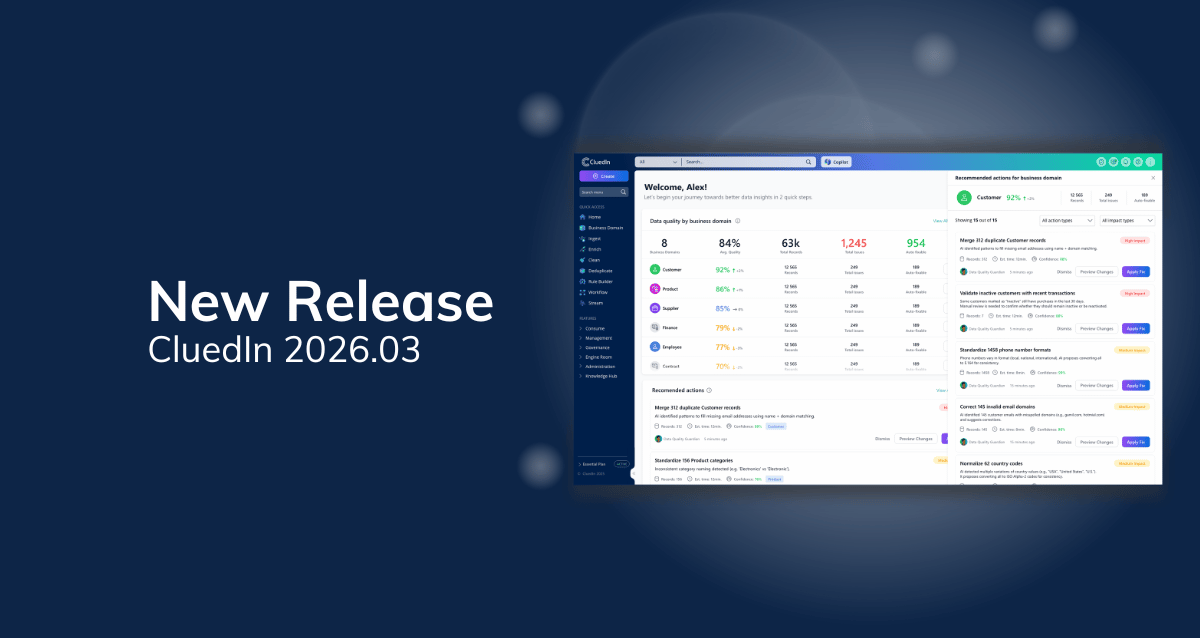
CluedIn 2026.03
More of the platform can now understand the 'work' around the data, not simply process the data itself.
That shows up in several places across this release: how new data is onboarded, how long-running work is organised, how enrichment decisions are made, how relationships are explored and how much of the platform can be operated without somebody constantly sitting in front of it.
Give CluedIn the data. It can now do considerably more with the arrival.
The AI Agent work in this release is probably the clearest example of where CluedIn is heading. When new files or ingestion endpoints appear, agents can inspect what has arrived and begin putting together an onboarding plan. That can cover mappings, Business Domains, validation rules, relationships, AI Jobs, icons and other configuration that would normally be assembled manually during implementation.
It gets more interesting when the data stops being tidy...
Multiple files can belong to the same Business Domain. Different files can describe different domains but contain relationships between them. Several source systems can be onboarded at the same time. An early mapping choice can look reasonable until another file provides context that changes the picture.
The agent experience has been built to deal with that kind of messiness. It can work across the wider onboarding task, revisit earlier decisions and build a plan that reflects what it finds as it goes.
The plan is visible before it runs. A user can inspect it, amend it and decide what should happen next. The automation is doing more of the preparation, but the implementation has not disappeared into a black box.
Job Monitoring and Job Detail in CluedIn
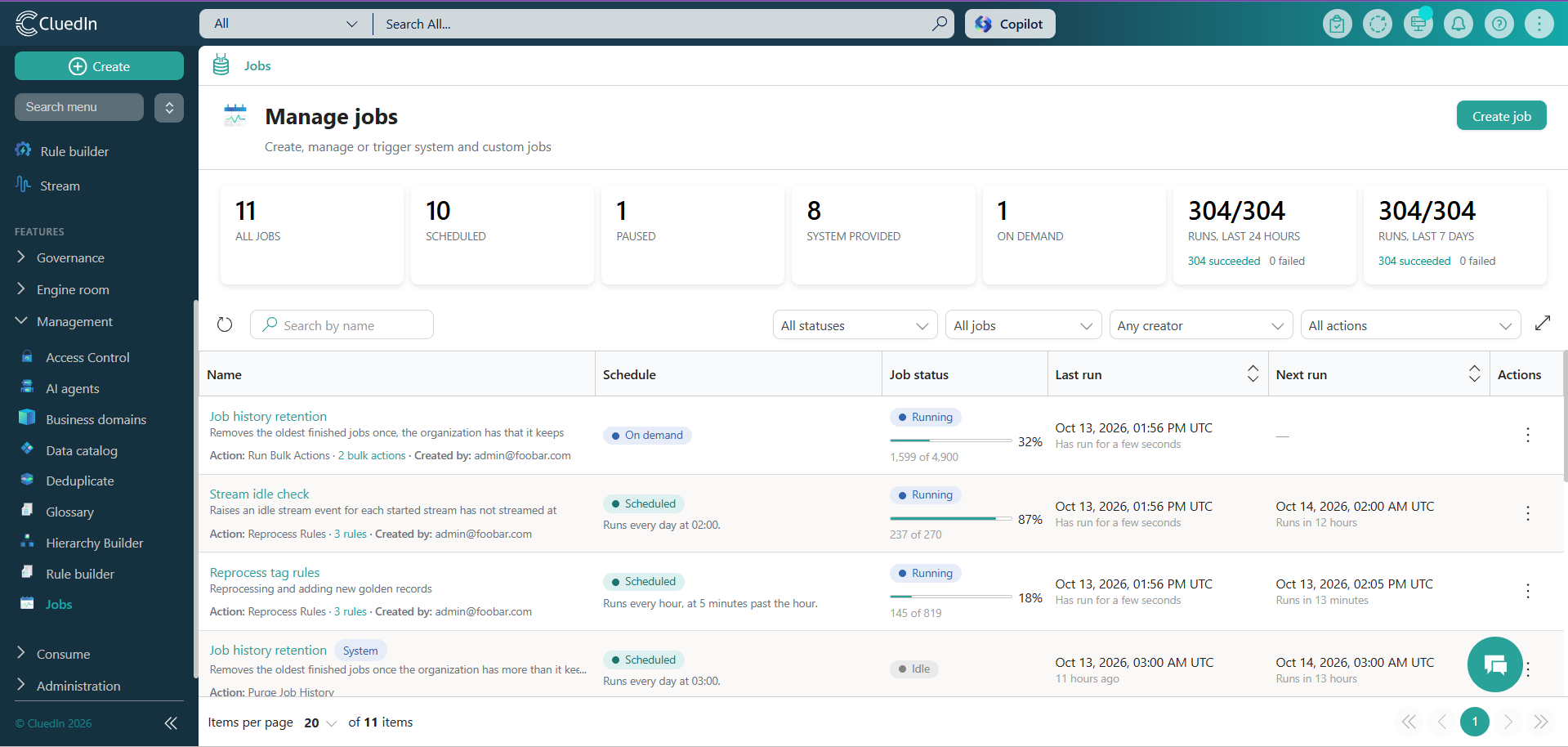
CluedIn Job Monitoring
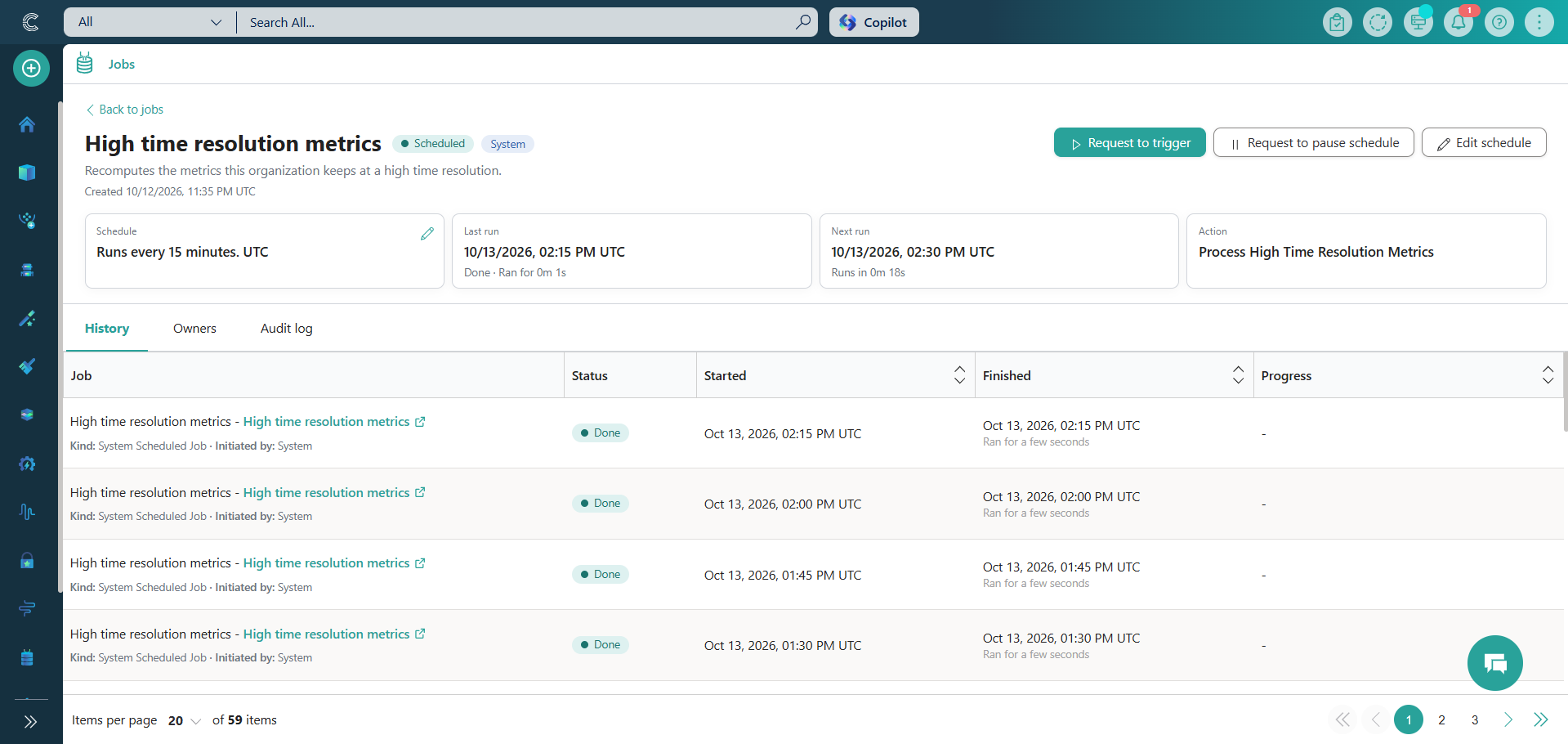
CluedIn Job Detail
This also makes the idea of a headless MDM or data quality implementation considerably less theoretical.
There will always be people who want to work directly in the interface, and there are plenty of decisions where that remains exactly the right thing to do. But the interface no longer needs to be the starting point for every piece of work.
A greater proportion of the implementation can now be driven by intent, conversation and agent-led planning. The platform works out more of the steps underneath, while the user concentrates on whether the result makes sense.
That is a subtle shift, but an important one. MDM has accumulated decades of operational ceremony. We are steadily stripping away the parts that exist only because the software once needed them.
The aim is not to remove people from data management. It is to stop wasting their time on work the platform is increasingly capable of carrying itself.
Enrichment is rarely as certain as the workflow makes it look
Ask an enrichment provider to identify a company, address or organisation and sometimes there is one obvious answer. Sometimes there are three. That ambiguity is part of working with real enterprise data. Pretending it does not exist only pushes the decision somewhere else in the process.
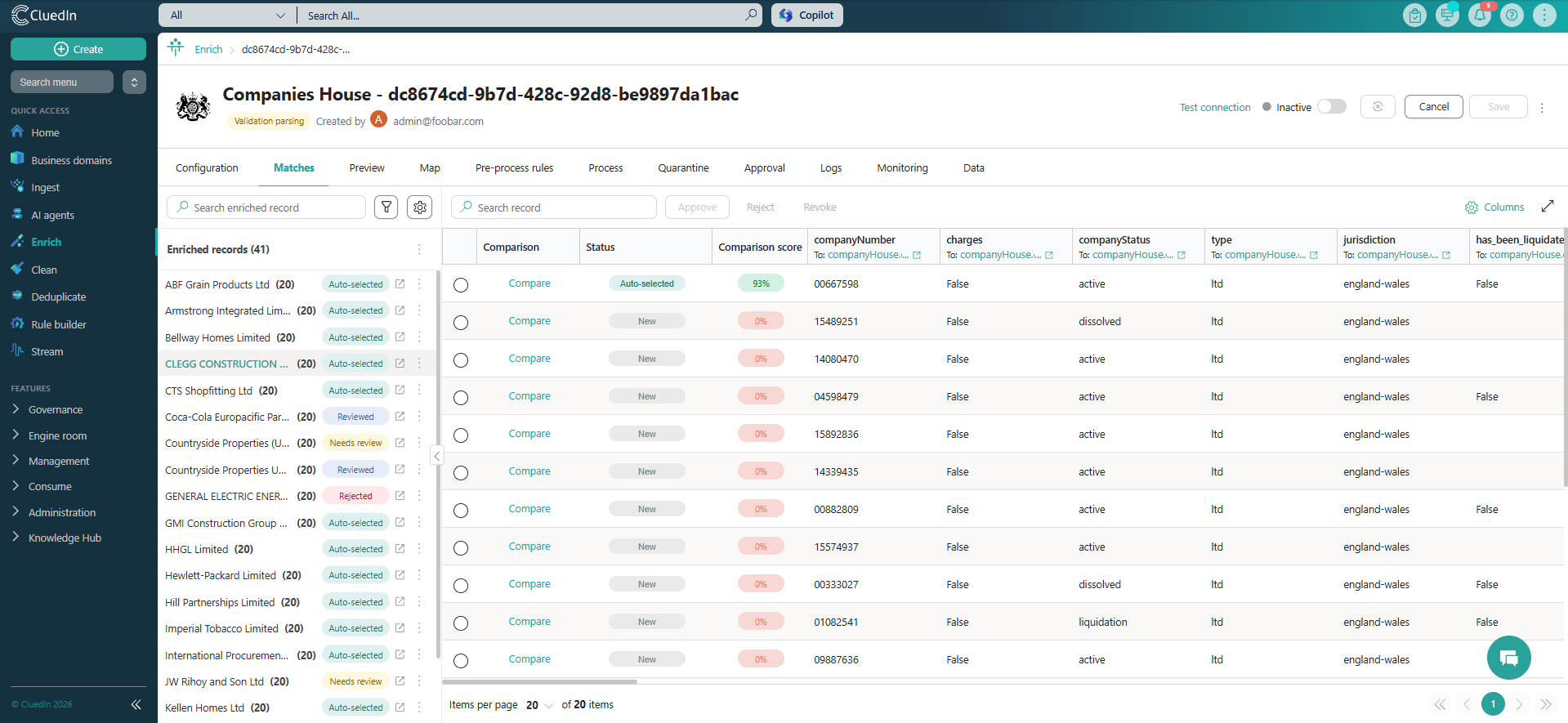
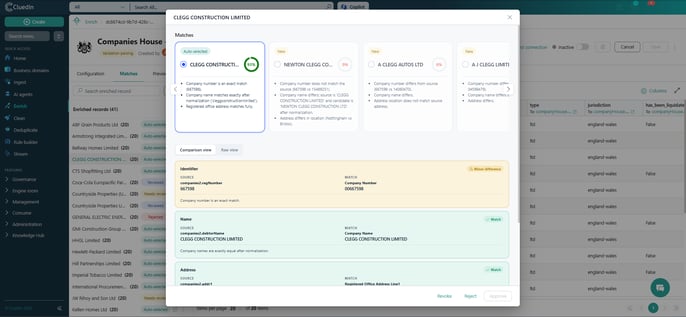
Enrichers in CluedIn can now return multiple candidate matches for a Golden Record. Those candidates can be compared together, approved or rejected, or automatically selected through rules and AI where that is appropriate.
There is also a testing step before enrichment is committed. You can evaluate what the change will do to Golden Records first, which makes it possible to automate more without asking users to accept more uncertainty.
Multiple candidates
The platform can surface uncertainty instead of quietly burying it.
Candidates can be reviewed side by side, rejected, approved or selected automatically where confidence and policy allow.
Test before applying
Automation is far more useful when you can see the consequences first.
Enrichment changes can be evaluated against Golden Records before they are committed.
Then there is all the work that should happen without somebody watching it
Reprocessing rules. Running bulk operations. Reprocessing records. Retention jobs. Scheduled maintenance. These are necessary parts of running a serious data platform, but nobody buys MDM because they want to spend their day supervising background processes.
The new Jobs and Monitoring framework gives that work a proper home. Custom Jobs can be created with or without schedules. Their progress can be followed through the UI, completed work can be reviewed later and running jobs can be cancelled when required. System Jobs now sit inside the same framework rather than behaving like a separate layer of platform machinery.
This is one of those improvements that becomes more valuable as automation increases. The more work you hand to the platform, the more important it becomes to know exactly what is running, what happened and where something needs attention.
A business is not a collection of disconnected records
This sounds obvious until you look at the way enterprise software has traditionally presented data.
Customers are viewed in one place, products in another, suppliers somewhere else. Relationships exist, but the interface often makes you hunt for them. When the data estate gets large enough, the picture disappears behind the records.
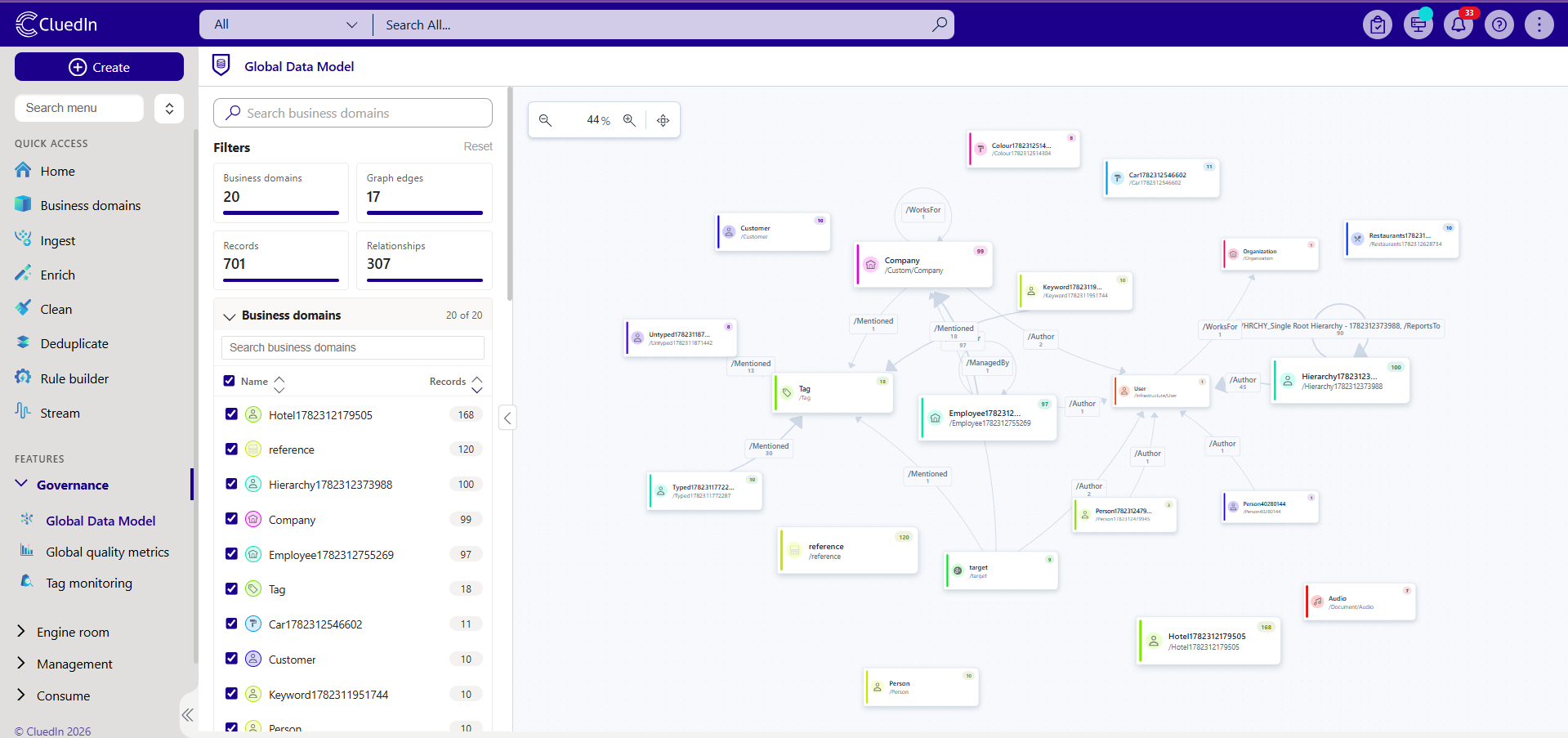
The improved Global Data Model and Ontology Viewer makes that picture easier to see. Business Domains can be viewed according to record volume, filtered by data source and displayed even where relationships have not yet been established.
That matters for people trying to understand the estate, but it also matters for the agents working across it. Context is increasingly part of the product itself: which data belongs together, how records relate, what came from where and what those relationships mean to the business.
Global Data Model / Ontology Viewer
There is also a lot in this release that is deliberately less visible.
The platform has moved to .NET 10. Elasticsearch has been upgraded from 7.17.29 to 9.5.1 and RabbitMQ from 3.7 to 3.13.7. Those changes bring the usual security and platform improvements, but the release also contains a substantial amount of work aimed at making everyday use faster.
Mapping previews are significantly quicker. Large dataset views have been optimised. Dataset mappings, ingestion queries and relationship queries have all received performance work. Duplicate detection is faster, Golden Record searching has been improved and several expensive background operations have been reduced or removed.
Data source processing idle memory usage has dropped from roughly 1.5 GB to around 650 MB. That is not the kind of feature anyone puts on a buying committee slide, but it is exactly the kind of engineering work a mature platform needs.
.NET 10
Core platform upgrade
~60%
Lower data source processing idle memory
We are gradually changing the amount of MDM that feels like operating MDM
That is probably the simplest way to describe the direction behind 2026.03.
CluedIn still gives data teams the controls, workflows, rules and interfaces they need. Those things are not going away. What is changing is how often a person needs to initiate every task, assemble every sequence and supervise every piece of routine work.
Some work can now begin because data arrived. Some can run because a schedule says it should. Some decisions can be prepared by an agent and brought to a person with the context already assembled. Other actions can simply continue in the background, visible and governed without demanding attention.
That is what makes Agentic Data Management interesting to us. Not the presence of AI in the interface, and not another assistant waiting for instructions. The value appears when the platform starts carrying a meaningful share of the operational load.
2026.03 carries more of it than the release before.
Release 2026.03
Less operational friction around the data. More of the work handled inside the platform. The same expectation of control.
The result is a CluedIn platform that is faster, more automated and increasingly capable of turning fragmented enterprise data into trusted records without making people manually orchestrate every step along the way.